How can we help?

Human beings, on the whole, want to help each other. But why? And why does it sometimes fail, or not materialise, or make things worse? Why does it sometimes benefit the helper more than whoever they’re supposed to be helping?

I’ve been thinking and writing about this a lot, so I’ve created a new space to develop it further.

At howcanwehelp.blog, I’m looking into what we can learn from the diverse fields of psychology, philanthropy, development aid, activism, community, volunteering, and others, about how to help better.  

It draws on my own experience as a journalist covering international aid and social enterprise, as a student of philanthropy, and as a writer/editor helping charities to communicate their work, as well as time spent volunteering, training and mentoring. And of course, as a human who has often failed to ask for help when it was needed, and failed to give help when it was needed. 

I’d love to hear your feedback or suggestions of what to explore next – hope to see you there.

Fit for a king

Britain is crowning a new(ish) King next month, so we’re all being encouraged to spend a once-in-a-generation bank holiday doing something nice for each other. But the Big Help Out, which promises to “give everyone an opportunity to join in”, has already prompted concerns that it will flop, further undermining efforts to recruit and engage new volunteers.

If that all sounds a bit gloomy, it’s because volunteering in England has dropped to its lowest level of the past decade. The issue isn’t only here: shortages have also been reported in Australia and in the USA, and just last week, Volunteer Canada was campaigning to reverse a “dramatic decline in volunteers”, with 65% of volunteer-supported organisations short of people, even as a third report increased demand for their services.  

Continue reading “Fit for a king”

Sticking around

Planning ahead

A former colleague told me recently that he’s started mentoring a kid. It’s not just the occasional phone call or a few trips to the cinema, though: he has signed up to a programme that commits you to meeting up with the same child on three weekends out of four, for a minimum of two years.

How many of us stick at anything, consistently, for a full two years? It’s so easy to set good intentions, then find that other stuff – work exhaustion, family demands, travel plans, life admin – gets in the way. I’m hugely impressed by the volunteers who sign up for two years, but also by charities that aren’t afraid to require it of their volunteers, because they know that for vulnerable kids, consistency matters. 

A day after that conversation with my former colleague, I got a handwritten thank-you letter, out of the blue, from the kids’ charity where I’ve been volunteering on and off for some years. It was completely unexpected, and also unnecessary – like many other volunteers, I do it because I enjoy being there, because I love what the charity does, and because I’ve grown to feel proud to be part of a lovely little community. (Other volunteers include primary school teachers who give up their Saturday mornings to spend more time with excitable children; another, a writer, recently turned up directly off an overnight flight from the USA – she could easily have skipped that session, but said volunteering was the highlight of her week.)

Continue reading “Sticking around”

Pyjamas optional: microvolunteering

IMG_20161219_134816
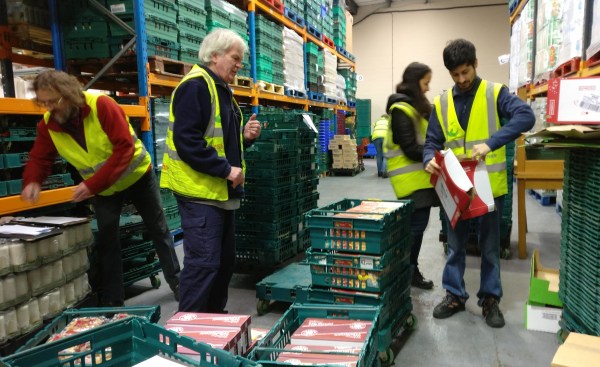
Wanna work in a warehouse? Check out Fareshare (Photo: Rachel Stanley)

Yesterday, perhaps a little lost among the egg-based puns and the stockpiling of sweet things, was Microvolunteering Day. The occasion itself is fairly new (first celebrated in 2014), but the concept of citizens helping out with bite-sized, commitment-free tasks has been around for some time. Trying to flog Oxfam chocolates to commuters at a Brussels train station back in 2009 is still one of my few experiences of cold-selling (I’ve forgotten how many packs I managed to shift, though I do still remember how to say ‘have a nice evening’ in Flemish). And people have been baking for cake sales or rattling collection tins for decades.

Nowadays, though, new technology and new networks have made helping out more accessible, and more varied, than ever.

Continue reading “Pyjamas optional: microvolunteering”