Pyjamas optional: microvolunteering

IMG_20161219_134816
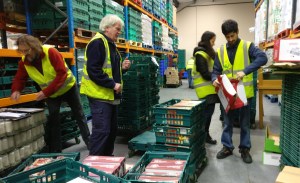
Wanna work in a warehouse? Check out Fareshare (Photo: Rachel Stanley)

Yesterday, perhaps a little lost among the egg-based puns and the stockpiling of sweet things, was Microvolunteering Day. The occasion itself is fairly new (first celebrated in 2014), but the concept of citizens helping out with bite-sized, commitment-free tasks has been around for some time. Trying to flog Oxfam chocolates to commuters at a Brussels train station back in 2009 is still one of my few experiences of cold-selling (I’ve forgotten how many packs I managed to shift, though I do still remember how to say ‘have a nice evening’ in Flemish). And people have been baking for cake sales or rattling collection tins for decades.

Nowadays, though, new technology and new networks have made helping out more accessible, and more varied, than ever.
Continue reading “Pyjamas optional: microvolunteering”

Young news

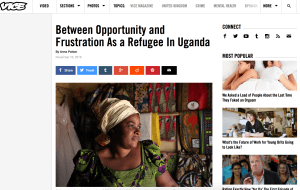
screen-shot-2016-11-21-at-11-13-36The stories of exiled Congolese entrepreneurs Patrick, Alex, Mimy and Chantale finally made it into Vice, also appearing in the UK print edition of the magazine (with my trip supported by One World Media’s production fund). It’s perhaps an unusual destination for an article about refugee lives in Africa; sitting next to headlines like ‘People’s stories on the last time they faked an orgasm’ and ‘We went on a tour of London’s worst-rated nightclubs’. But the Canadian-American outlet, which is squarely aimed at younger audiences and embraces the provocative and politically incorrect, isn’t only about sex, crime and entertainment. News is now their fastest growing division, according to Creative Review, in which Vice’s CEO was quoted earlier this year saying they tapped into a “big white space…. there was a perception that Gen Y didn’t really care about news which is obviously not true, so that will continue to grow.” Here’s hoping.
Plant your feet, and other storytelling tips

yourstory

Earlier this year I gathered a few VSO colleagues to join me on the Acumen+ Storytelling for Change course, which is all about bringing (personal) stories into your professional communication, helping you to connect with (and convince) your listeners as you present.

I’ve tried before, and failed, to complete online courses; free ones like these are even harder to see through. What worked this time? Mainly it was  committing to meet weekly as a group for the duration of the modules (guilt about letting other people down is stronger than the guilt of letting yourself down, it seems). But also genuine enthusiasm within the group for the topic, and a sense that the lessons were fairly universally relevant.

Here are some of the best bits of learning for me: Continue reading “Plant your feet, and other storytelling tips”

Giving time

It was Volunteers’ Week here in the UK (as well as Women’s Sport Week, in fact – nice profile of boxer Nicola Adams here on role models). It doesn’t seem to make many headlines outside the charity sector – yet the scale of volunteer work in this country is much larger, surely, than most people realise. 15.2m people in the UK (nearly a quarter of the entire population) volunteer each month; 0f the 164,000 registered charities, an amazing 90% have no paid staff, not to mention an estimated 150,000 further, non-registered organisations, also run by volunteers.

It’s not only the actual work these people do that matters, though. It’s also how they do it, according to research recently published by VSO (my current placement): by giving time for free to help a good cause, volunteers are expressing values of solidarity and citizenship that can prompt knock-on effects on others. As a headteacher in Nepal said, according to the research, “when the volunteer came to help, the [local community] think if someone can come to help us, we can help each other”. Continue reading “Giving time”

Going big, with purpose

I’ve gone from a tiny organisation – my last employer had just one part-time staff member – to a huge one: the British Council is the UK’s largest charity, works in over 100 countries, and employs some 7000 people. Another change: my stint at British Council is part of a one-year programme, run by On Purpose, that aims to ‘develop leaders’ in the social enterprise sector.

(What’s a social enterprise? Good question. Simplest of the dozens of hazy definitions: a business for social purpose – think the Big Issue magazine.)

The idea behind On Purpose is that there are loads of start-ups with noble intentions, and plenty of funding and schemes to support the entrepreneurs behind them, but a weak spot still in terms of the managers and professionals needed to keep those new businesses going. And, of course, to make those initiatives broader and better, since scaling up the successful models is one of the big challenges right now. Continue reading “Going big, with purpose”

Your daily dollar

Google’s One Today app launched earlier this year. It seems simple: it showcases a different non-profit every day, and if you like what you see, you can donate $1 – no more.

It’s still pretty new – and available in the US only, with no word yet of plans to expand. It’s not the first microdonation app. But it is, to my knowledge, the first one with a massive brand behind it, not to mention a ready community of nonprofits eager to be promoted and an existing money transfer service.

So, will this change how we give to charity? Will instant yes-or-no and commitment-free mark the demise of direct mail and clipboard-wielding chuggers?

Probably not. Microdonations, as Cause4Opinion point out, have been around forever, in the form of dropping your loose change into a tin for the local football club or a new church roof. This is what the likes of Google’s new venture – the digital equivalent of the tin on the shop counter – replaces; charities will still need your long term commitment as well.  Continue reading “Your daily dollar”