How can we help?

Human beings, on the whole, want to help each other. But why? And why does it sometimes fail, or not materialise, or make things worse? Why does it sometimes benefit the helper more than whoever they’re supposed to be helping?

I’ve been thinking and writing about this a lot, so I’ve created a new space to develop it further.

At howcanwehelp.blog, I’m looking into what we can learn from the diverse fields of psychology, philanthropy, development aid, activism, community, volunteering, and others, about how to help better.  

It draws on my own experience as a journalist covering international aid and social enterprise, as a student of philanthropy, and as a writer/editor helping charities to communicate their work, as well as time spent volunteering, training and mentoring. And of course, as a human who has often failed to ask for help when it was needed, and failed to give help when it was needed. 

I’d love to hear your feedback or suggestions of what to explore next – hope to see you there.
Fit for a king

Britain is crowning a new(ish) King next month, so we’re all being encouraged to spend a once-in-a-generation bank holiday doing something nice for each other. But the Big Help Out, which promises to “give everyone an opportunity to join in”, has already prompted concerns that it will flop, further undermining efforts to recruit and engage new volunteers.

If that all sounds a bit gloomy, it’s because volunteering in England has dropped to its lowest level of the past decade. The issue isn’t only here: shortages have also been reported in Australia and in the USA, and just last week, Volunteer Canada was campaigning to reverse a “dramatic decline in volunteers”, with 65% of volunteer-supported organisations short of people, even as a third report increased demand for their services.  

Continue reading “Fit for a king”

Royal recognition

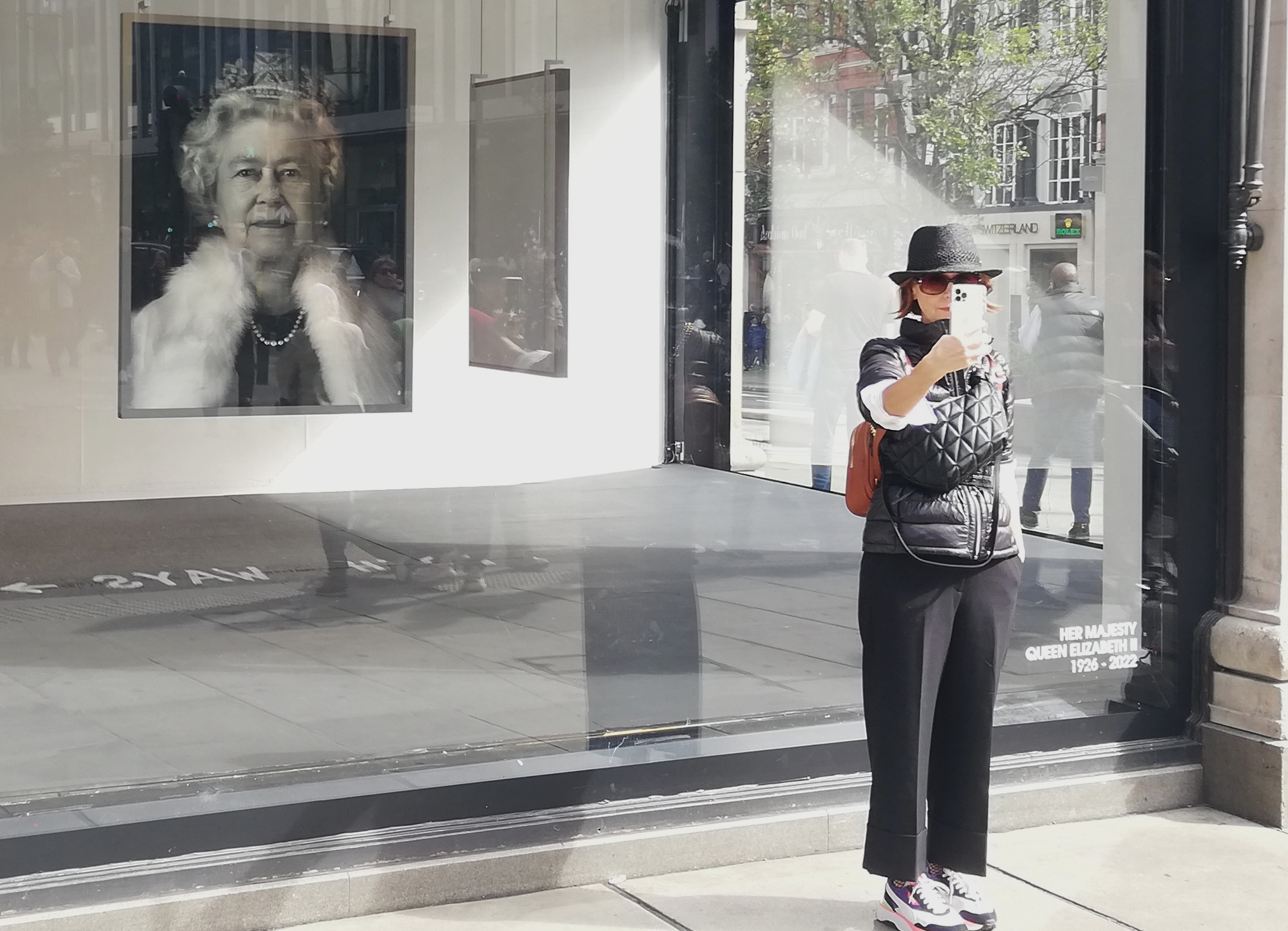
Remembering the late monarch with a selfie

“Well, they do a lot for charity…”

It’s a common response when you ask people what purpose the British royal family still serves. For some, good causes are the monarchy’s primary purpose: according to recent research from Charities Aid Foundation, a third of Brits believe that the royals’ most important role is supporting charities. (It’s not clear what the remaining two thirds feel is most important.) And a quarter think they first heard about a campaign or cause thanks to royal support.

But do they really do a lot for charity?

Analysis in 2020 by Giving Evidence of the apparently rather opaque world of royal patronages found no evidence that these increase a charity’s revenue (in some cases, they may even cost them money), nor that royalty increases generosity more broadly.

Continue reading “Royal recognition”

Motivations matter

People clearly like to help other people. Last year a friend posted on LinkedIn that she was looking for a mentor; she expected one or two responses – but got an astonishing 25 offers. You see it the other way round, too: mid-career professionals offering time to answer questions or advise younger people on breaking into their industry. 

Why help a stranger? Some remember their own early-career struggles. Some want to help open up a field that lacks diversity. Some, no doubt, do it because they benefit too: they learn something new, they connect with someone of a different background or generation, they boost their own profile. (All of these reasons influenced my decision to mentor with CharityWorks.) The mentor that my friend ultimately chose said that he wanted to continue meeting up partly because her extensive professional network might one day be useful to him. Does that take away from his offer? I don’t think so. Altruism + a selfish motivation might just be the combination that makes something stick.

Continue reading “Motivations matter”

Sticking around

Planning ahead

A former colleague told me recently that he’s started mentoring a kid. It’s not just the occasional phone call or a few trips to the cinema, though: he has signed up to a programme that commits you to meeting up with the same child on three weekends out of four, for a minimum of two years.

How many of us stick at anything, consistently, for a full two years? It’s so easy to set good intentions, then find that other stuff – work exhaustion, family demands, travel plans, life admin – gets in the way. I’m hugely impressed by the volunteers who sign up for two years, but also by charities that aren’t afraid to require it of their volunteers, because they know that for vulnerable kids, consistency matters. 

A day after that conversation with my former colleague, I got a handwritten thank-you letter, out of the blue, from the kids’ charity where I’ve been volunteering on and off for some years. It was completely unexpected, and also unnecessary – like many other volunteers, I do it because I enjoy being there, because I love what the charity does, and because I’ve grown to feel proud to be part of a lovely little community. (Other volunteers include primary school teachers who give up their Saturday mornings to spend more time with excitable children; another, a writer, recently turned up directly off an overnight flight from the USA – she could easily have skipped that session, but said volunteering was the highlight of her week.)

Continue reading “Sticking around”

Everyone’s a philanthropist… once we get around to it

“Instantaneous generosity”: it could be good for you

A family friend told me recently that he and his wife, both writers, wanted to get into philanthropy. It’s not something I often hear, outside my professional bubble. Giving makes you feel good, so why don’t more people do it regularly? 

Partly, I think, because there’s an assumption that philanthropy is only for the very wealthy.

Donations from the likes of Bill Gates or Jeff Bezos get heaps of attention. The scrutiny is important. But it also means that the central characters in most philanthropy stories are business moguls, sports champions and Hollywood stars – no wonder the field can feel as distant a prospect as owning a superyacht. 

Continue reading “Everyone’s a philanthropist… once we get around to it”

Starting positive

edu-lauton-71055
Photo by Edu Lauton on Unsplash

The charity sector can feel a bit gloomy at times. Shrinking budgets and ever more competition for funding, tighter regulations, and more time spent reporting than doing.

And yet what draws many people (including me) to the sector in the first place is an optimistic streak, a belief in human power to change things for the better.

So it was refreshing to look on the brighter side again for a recent article — and nope, it wasn’t too difficult to come up with five reasons charities can be cheerful this year. Continue reading “Starting positive”

The new nonprofit library

IMG_7539
Lots of info, but is it up to date?

I’ve been working since last year with MissionBox, a website that provides a huge range of how-to guides, advice, case studies, feature articles and templates for nonprofits. As a startup, there’ve been a few shifts of direction along the way, but the site has just relaunched and it’s great to see it taking shape.

MissionBox is based in the US and one of the challenges has been making sure the content written by our American colleagues is relevant and accurate here in the UK. In some cases that has meant drafting separate/equivalent pieces — that goes for any legal or tax topics, but also some less obvious ones like the expectations of a nonprofit board, or working with foundations. Continue reading “The new nonprofit library”

Selfie stick optional

Seven ways to do better live reporting from events

Cheese
Ready to stream

We’re all using social media, so there’s an assumption that anyone can also live tweet from an event. But I don’t think that’s the case, or at least, not without practice. Often conference updates feel a bit bland (so what?), or irrelevant to those who aren’t in the room, or they simply miss out a lot of opportunities.

So I attended the Nonprofit Tech for Good webinar last week on live online reporting, and learned it takes a fair bit of thought to create useful, accurate updates that add to the conversation in the room, and that are valuable long after the conference has finished. Below are some tips: Continue reading “Selfie stick optional”