Belatedly, a selection of images from travels in Kerala, Goa and Mumbai last month.
In Mumbai, I also met with the ‘incubator’ for social entrepreneurs, UnLtd India – you can read my interview piece published by Devex Impact here.
Belatedly, a selection of images from travels in Kerala, Goa and Mumbai last month.
In Mumbai, I also met with the ‘incubator’ for social entrepreneurs, UnLtd India – you can read my interview piece published by Devex Impact here.
It’s almost two years ago to the day that I sat in a living room in North London with two people I’d met a week previously and agreed to make a documentary together about something I knew nothing about.
Unladylike, the story of women’s boxing in the UK, is still in progress. Part of me is horrified that it’s taken so long; I probably wouldn’t have signed up to this if I’d known what a beast it would become. Part of me, though, is secretly proud that we’ve stuck at it despite (between the three of us) one birth, one bereavement, several career changes, multiple moving-of-houses, one major computer crash, numerous months in other countries/continents, full-time jobs – and a budget of roughly zero. Still many, many more weekend editing sessions to go till it’s done – here’s a preview in the meantime.
Romanian TV journalist Lorelei Mihala and I worked together last year for two weeks in two cities, funded by the Council of Europe’s Mediane project. Here’s what came out of it (scroll down for more photos and video).
One in five young people – around 5.5 million citizens – in the EU are unable to find work; many more do jobs for which they are overqualified. Youth unemployment regularly hits the headlines across Europe – but what are the stories behind the statistics? A report from Bucharest and London
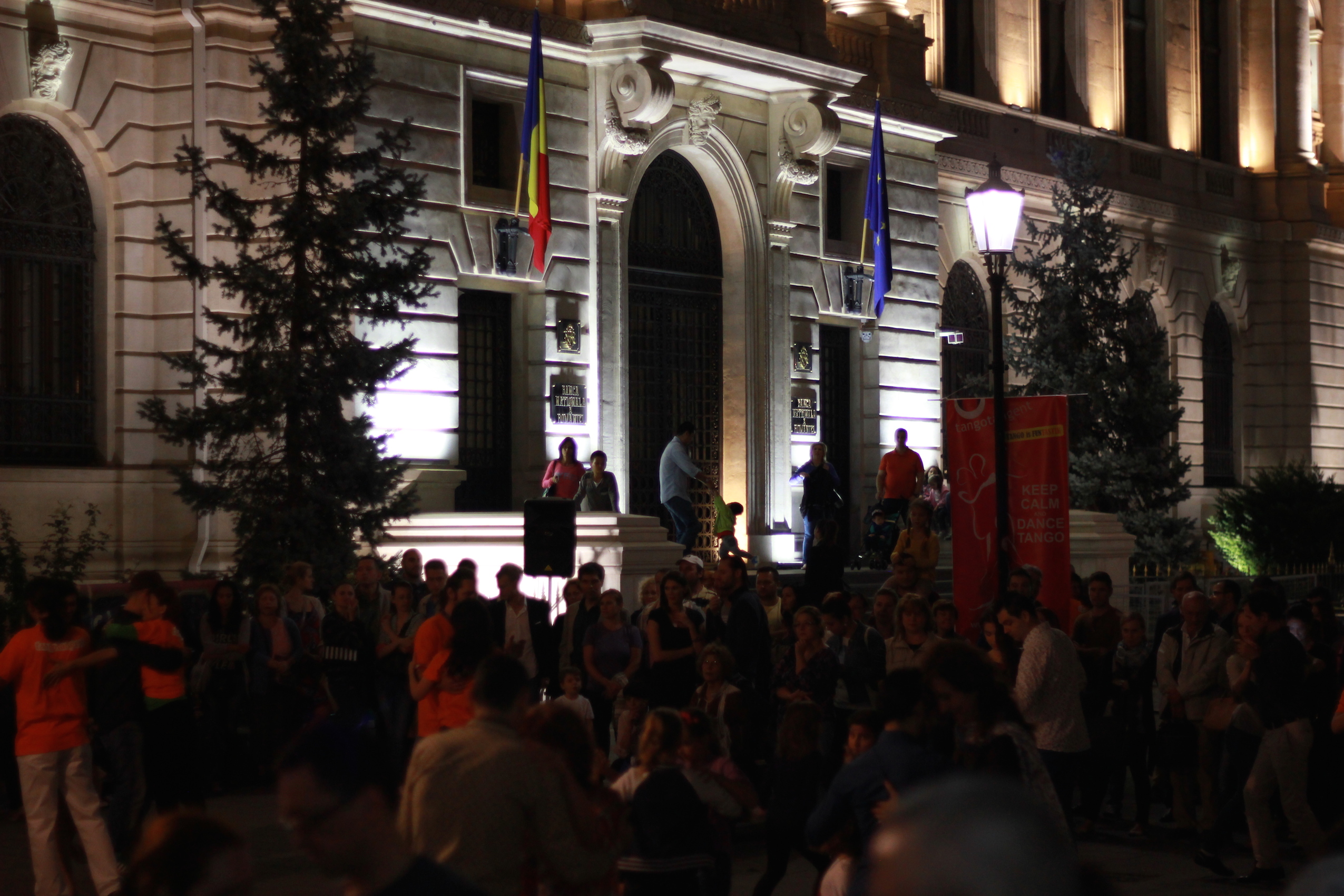
Continue reading ““I want to be a pioneer” – Young ambition in Bucharest and London”
There’s a satisfaction in ordering the disordered, making sense of the scattered.
We’re halfway through the first of our six-month OnPurpose placements, and before breaking up for Christmas we reviewed what each of us found challenging / interesting in our work.
Our cohort of 18 are a fairly diverse bunch (backgrounds in law, finance, consulting, life sciences, business development, fundraising, etc.). And our current workplaces range from tiny to global, from start-ups to household names, from pushing profit to donor-driven – organisations across the whole spectrum or even on the edges of social enterprise. Drawing general conclusions from our experiences, then, might be a stretch…. I can’t resist trying, though. Here’s the summary. Continue reading “Working with uncertainty”
My exchange partner Lorelei and I are finally finishing up our joint project, part of the Council of Europe’s work to encourage more diversity in the media. Our full piece is coming soon; in the meantime, here’s a little preview – thanks to Iqraa (Somali) in London and Kiki (from Nigeria) in Bucharest – of what we talked about.
I’ve gone from a tiny organisation – my last employer had just one part-time staff member – to a huge one: the British Council is the UK’s largest charity, works in over 100 countries, and employs some 7000 people. Another change: my stint at British Council is part of a one-year programme, run by On Purpose, that aims to ‘develop leaders’ in the social enterprise sector.
(What’s a social enterprise? Good question. Simplest of the dozens of hazy definitions: a business for social purpose – think the Big Issue magazine.)
The idea behind On Purpose is that there are loads of start-ups with noble intentions, and plenty of funding and schemes to support the entrepreneurs behind them, but a weak spot still in terms of the managers and professionals needed to keep those new businesses going. And, of course, to make those initiatives broader and better, since scaling up the successful models is one of the big challenges right now. Continue reading “Going big, with purpose”
 “Do your research. Don’t be scared to try and do what you always wanted to do. Think of something really challenging”
I spent my summer months at the Mark Evison Foundation helping with their first proper evaluation of their youth programmes; the quote above was one response to the question “What would your advice be to future applicants?” (though it could apply to life in general…).
Anecdotally, the trustees knew there’d been tangible benefits of the foundation’s work – i.e. encouraging young people to plan personal challenges and funding the most motivated teams or individuals to see those challenges through. But, now in their fifth year of giving awards and with plans to expand, they needed something more concrete than anecdotal evidence or the excited emails we got from some of the award-winners returning from their trips.
Two focus groups, dozens of questionnaires, and millions of email reminders later, we got our data (the full report is here). What did we learn? Continue reading “Blisters and early mornings”
It’s been a busy few months, but I’m excited by the variety of stuff I get to learn (and write) about. Recently I’ve spoken to economists in Washington and Nairobi about grain storage and irrigation; to community leaders from Cameroon and India about child marriage and female genital mutilation; and to researchers about the growing intrusion of business onto the territory of humanitarian aid groups. (The latter also involved a demonstration of ‘Peepoo‘, a single-use ‘personal toilet’ – a sort of bucket liner that can be sealed and then rapidly sanitises excrement. Incredible, but true: more people in Africa have access to the internet than to decent sanitation.)
As the first regular contributor to Devex based in the UK, I’ve also been doing a lot of explaining to people here about who we are – and who we write for. Continue reading “Something to write about”
There’s something very powerful about the idea of citizens driving change.
Because, at whatever level – from organising as a community to keep a local library open, to leading the mass protest that topples a government – it’s a reminder that we don’t need to wait for heroes to change things, just someone like you or I, who’s sufficiently pissed off to do something about it.
But even if there are some great examples of user or citizen-driven ideas (and even if ‘entrepreneur’ has become an acceptable job title for a 21-year-old), there’s no guarantee that citizens will push for changes that make for a more sustainable future. Continue reading “Shapes of the future”
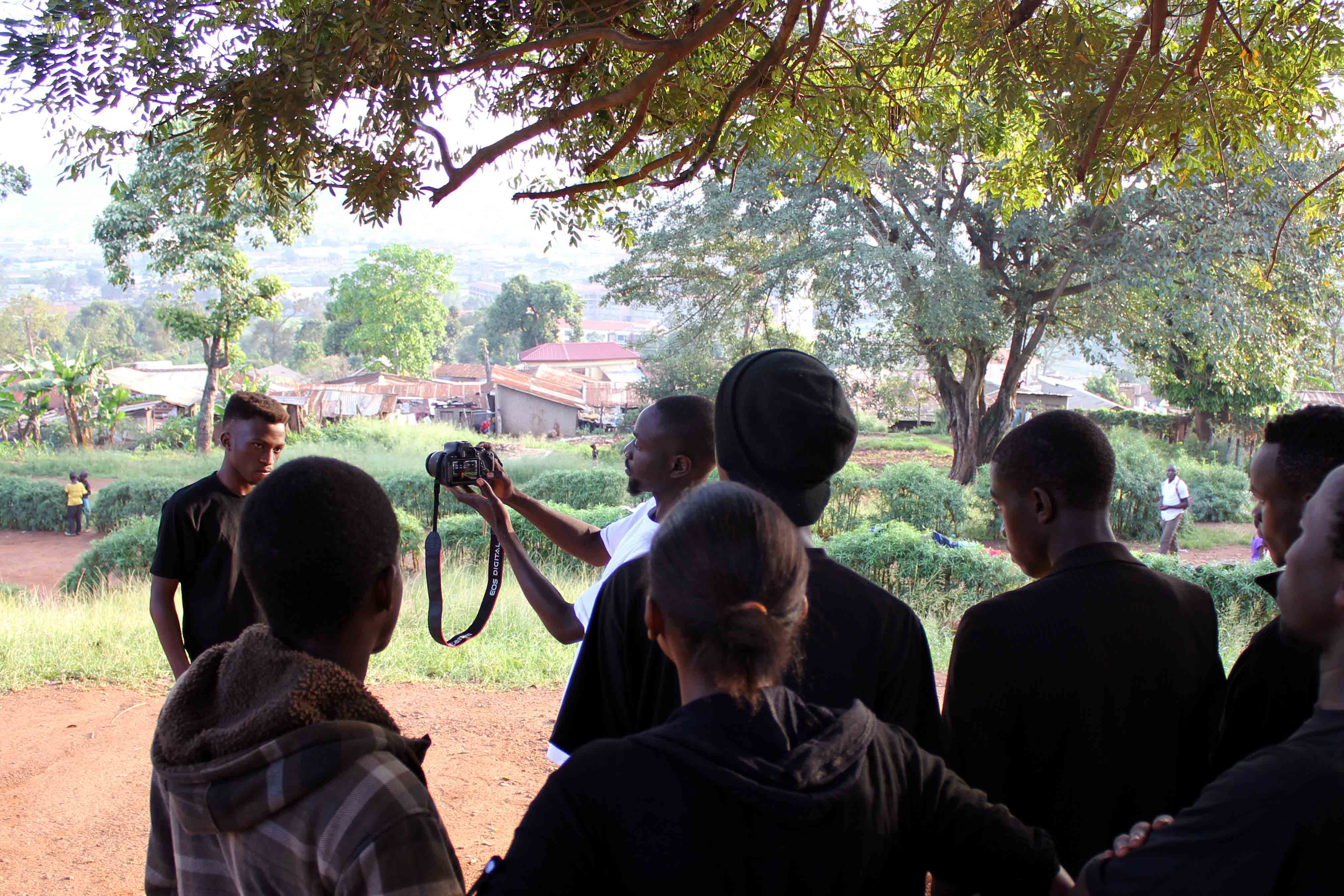
Seeing a TV set when boarding a long-distance bus in Tanzania usually made my heart sink. The music videos or the homegrown melodramas – the ones that take 10 minutes to tell you that our main character is upset, or one minute to show someone pulling into a driveway – never seemed to make those twelve-hour journeys pass more quickly.
So I understood Nes’s point, when I sat in on one of his classes in the slums of Uganda (I’ve written about that, here): be more subtle. To illustrate, the Ugandan filmmaker showed two shorts: powerful films with almost no dialogue that told a whole story without spelling it out. Western-made films, of course.
But I wonder now what he’d make of the critique, on Africa is a Country, of how the Western film industry is muscling in on (in this case) Tanzanian culture. Continue reading “The Swahiliwood sceptics”
 modern stories