Common goals

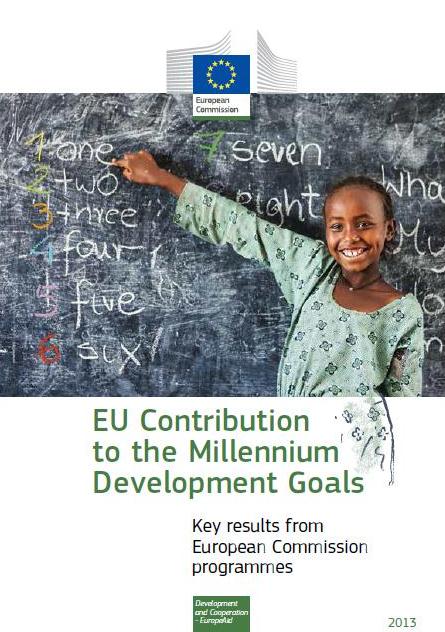
EU brochure on MDGsFreelancing on different projects all the time has one big downside: you’re pulled in only for a certain phase of the project’s life cycle, and once you’ve done your bit you’re often unaware of where your work has ended up, and what impact it might have had.

So it’s good to see the European Commission’s publication on the Millennium Development Goals out – just in time for the UN Summit last week. I had also edited their 2010 version (available, for now, here). This year, we struggled again to keep our clients down to the word limit – crowded pages with not enough white space just don’t work for a product aimed at a wider public – and ended up adding more pages. But it worked out ok, and the final editorial quality is better this time, probably due to fewer Commission folk making changes, and thankfully, a certain amount of trust in my suggestions. It also helped, no doubt, to have a first version to start from, with a format that could easily be updated. Continue reading “Common goals”

Your daily dollar

Google’s One Today app launched earlier this year. It seems simple: it showcases a different non-profit every day, and if you like what you see, you can donate $1 – no more.

It’s still pretty new – and available in the US only, with no word yet of plans to expand. It’s not the first microdonation app. But it is, to my knowledge, the first one with a massive brand behind it, not to mention a ready community of nonprofits eager to be promoted and an existing money transfer service.

So, will this change how we give to charity? Will instant yes-or-no and commitment-free mark the demise of direct mail and clipboard-wielding chuggers?

Probably not. Microdonations, as Cause4Opinion point out, have been around forever, in the form of dropping your loose change into a tin for the local football club or a new church roof. This is what the likes of Google’s new venture – the digital equivalent of the tin on the shop counter – replaces; charities will still need your long term commitment as well.  Continue reading “Your daily dollar”

Take the risk (and the picture)

JumaLearning photography means getting used to being told off – usually, for taking pictures. Sometimes, though, you get in trouble for not taking them.

Working at an aid agency in Dar es Salaam, I was responsible for documenting our fieldwork (and the one with the decent camera). When the heart-sinkingly inevitable time came to attend a funeral – the gardener/groundsman at our head office died after a sudden case of malaria – my colleagues told me: take photos.

Off we went, on a typically humid morning, to Juma’s home. A few hundred people had gathered under the awning. The women sat on the floor and wailed; the men stood or sat on wooden chairs wiping sweat from their brows. Continue reading “Take the risk (and the picture)”

Making magic

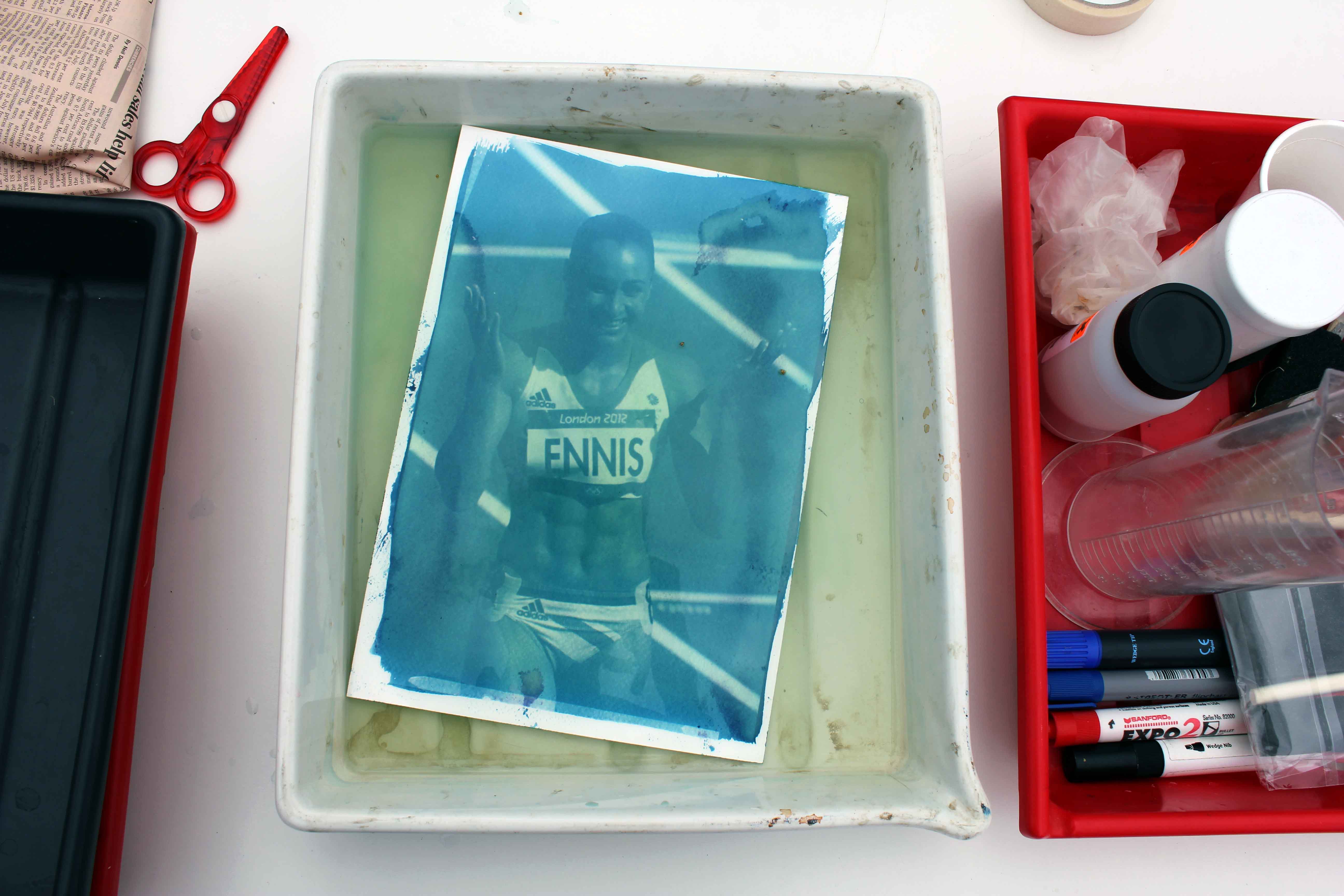
Cyanotype - rinsing“Oh I’m no good at that…”, said one lady who paused in front of our stall.

I was with the lovely folk at Fotosynthesis, who’d been asked to put on two photography activities at a community festival in south-east London. Inside, the studio portrait shots were a great success. People never hate being photographed as much as they claim, and thanks to the mini printer, they could leave with a (free) professional family portrait in their hands.

Outiside, it was a bit harder to convince people to get stuck in. Continue reading “Making magic”

The next China

Nigeria is set to surpass the US as the as the third-most populous country by 2050. By 2100, it could have more people than China. The populations of Burundi, Malawi, Mali, Niger, Somalia, Uganda, Tanzania and Zambia are all projected to increase at least five-fold by 2100; overall the population of Africa is set to quadruple by the end of this century.

Revised UN figures published last month show that Asia’s population is set to continue to rise to a peak within about 50 years, and then decline, while developed countries, especially in Europe, will stagnate or shrink. (The Washington Post has some useful visuals here.)

Meanwhile, the population of the least developed countries is projected to double (from 902 million today, to 1.8 billion in 2050). This would mean that by 2050, 86.4 % of the world’s population would live in less developed regions, including 19.0 per cent in the least developed countries. Continue reading “The next China”

And now, something a little different…

compr
Hogarth makes the cut

It’s not quite world-changing stuff, but you have to start somewhere, I guess.

I started with pugs. And learned a lot of unexpected, and probably not very useful, stuff along the way, like the fact that the crease on a pug’s forehead is supposed to be the Chinese character for “prince”, and that the pet cemetery at Hyde Park has three monkeys buried in it.

The LCC summer course in documentary photography, led by the endlessly energetic Anders Birger, gets you out shooting and putting together a photo story within two weeks. Sounds like plenty of time, but the hours just seem to evaporate. Before you know it you’re cramming in bits of text and agonising over which last image will make the cut. In a way, that’s the crucial bit. Which photos – and they might not be the most beautiful or the most technically perfect – tell the story you want to tell? And is it a story people can relate to? Will they care? Still mulling those things over – in the meantime, here’s my pug-inspired picture parade. Continue reading “And now, something a little different…”

Like nobody’s watching

Dancers in the darkTwo-and-a-bit afternoons of shooting, many more of editing, and some frustratingly slow file transfers all the way to China ended up with this (see below): a 7-minute clip about using dance for adults with disabilities.

Challenges? Not enough time to shoot, you might say – but there’s never enough (though I would’ve loved to film the dancers at home or around the city). Attempting to interview people with learning difficulties who spoke no English? With a good interpreter – once I’d clarified she had to translate my questions, not answer them herself – it actually worked out ok. The really difficult bit, the thing I hadn’t even really thought of till I was standing there, camera in hand, was pretty basic. How do I film these people? Continue reading “Like nobody’s watching”

Pictures without pity

Which image of Africa would you rather see: skeletal, abandoned child, or healthy-looking working family?

Most people would say the latter; certainly most of those in the aid sector  – some of whom were discussing this at the recent PICS festival – now consider the starving child images not only unethical, but also unhelpful. They’re “not effective”, is the general view.

sunglasses
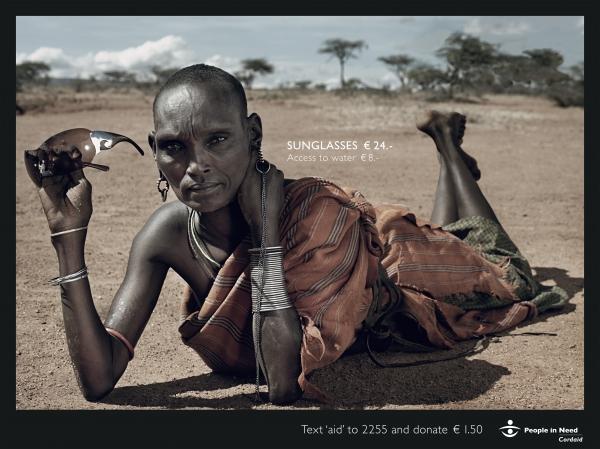
Provocative without the pity

But effective for what? Fundraising appeals today still deploy the same imagery, and the same language, as they did in the 1980s, when “poverty porn” made it to the mainstream with the Ethiopian famine hitting our headlines. That’s not only an indication that we’re seeing the same problems as we did three decades ago; it means we’re also stubbornly looking at them in the same way.

Continue reading “Pictures without pity”