Sticking around

Planning ahead

A former colleague told me recently that he’s started mentoring a kid. It’s not just the occasional phone call or a few trips to the cinema, though: he has signed up to a programme that commits you to meeting up with the same child on three weekends out of four, for a minimum of two years.

How many of us stick at anything, consistently, for a full two years? It’s so easy to set good intentions, then find that other stuff – work exhaustion, family demands, travel plans, life admin – gets in the way. I’m hugely impressed by the volunteers who sign up for two years, but also by charities that aren’t afraid to require it of their volunteers, because they know that for vulnerable kids, consistency matters. 

A day after that conversation with my former colleague, I got a handwritten thank-you letter, out of the blue, from the kids’ charity where I’ve been volunteering on and off for some years. It was completely unexpected, and also unnecessary – like many other volunteers, I do it because I enjoy being there, because I love what the charity does, and because I’ve grown to feel proud to be part of a lovely little community. (Other volunteers include primary school teachers who give up their Saturday mornings to spend more time with excitable children; another, a writer, recently turned up directly off an overnight flight from the USA – she could easily have skipped that session, but said volunteering was the highlight of her week.)

Continue reading “Sticking around”
Storytelling, solidarity, and smiling strangers

Three things I learned or loved this month

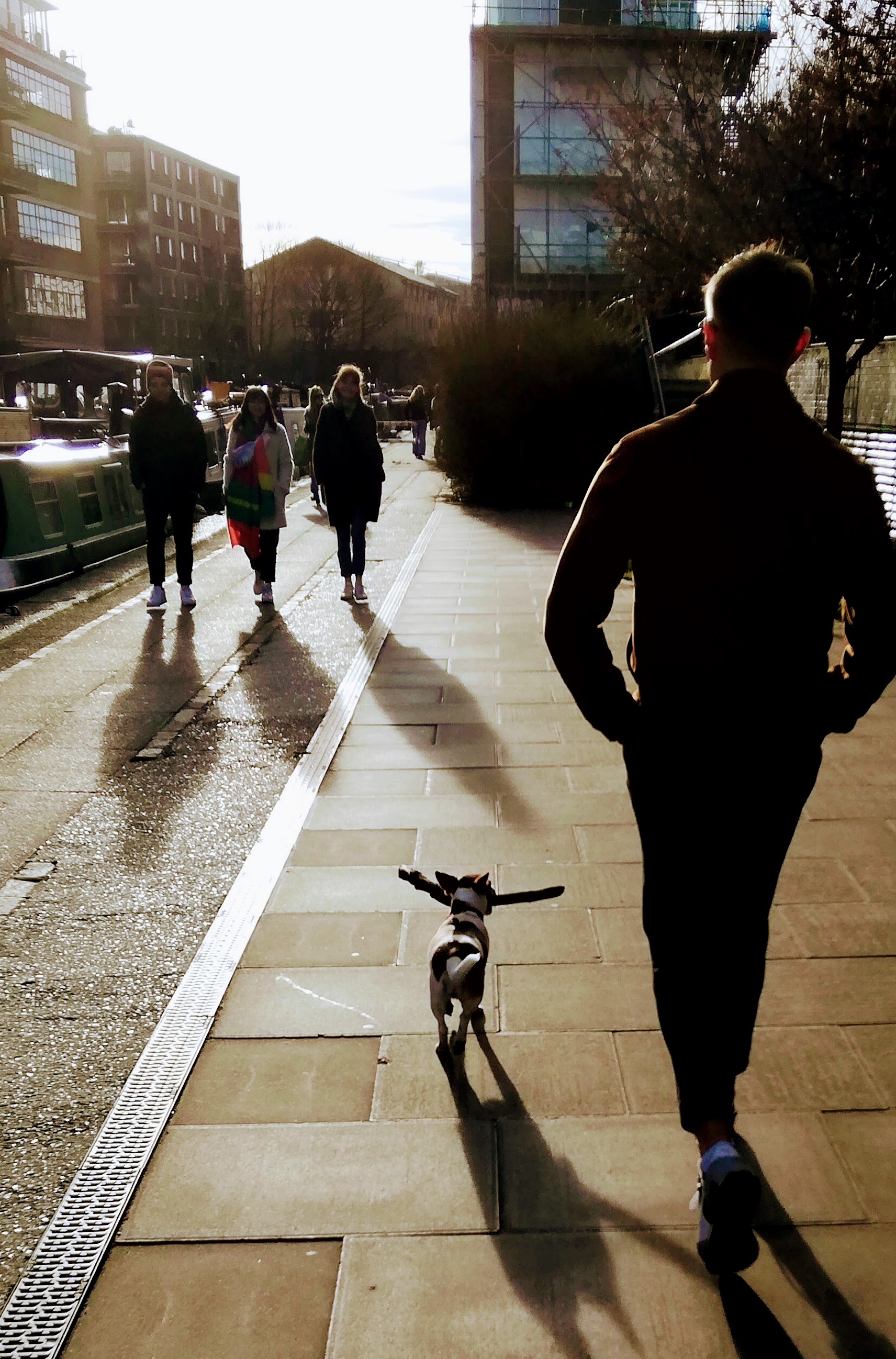
Small dog, big smiles

The hero’s journey is trotted out regularly in discussions on storytelling (and, therefore, also on advertising, campaigning, fundraising, and so on). The protagonist goes on a journey to fulfil a desire or answer a call to action; overcomes the enemy; returns home a changed person. Even if we don’t know the theory, we’re all aware of the formula somewhere deep in our bones. 

Into the Woods: How stories work and why we tell them, by former BBC/Channel 4 producer John Yorke, picks this formula apart, exploring each element and providing a few more clues to watch out for in any narrative. The three-act or five-act structure; the inciting incident, midpoint, crisis and climax; the central character who must face his or her opposite.

Some of it is almost gloomily formulaic: in a Bond or Hitchcock film, he writes, the crisis is nearly always a high-octane, 25-minute sequence at the end, set in a unique location, and almost always on territory that’s alien to our hero.

Continue reading “Storytelling, solidarity, and smiling strangers”

Everyone’s a philanthropist… once we get around to it

“Instantaneous generosity”: it could be good for you

A family friend told me recently that he and his wife, both writers, wanted to get into philanthropy. It’s not something I often hear, outside my professional bubble. Giving makes you feel good, so why don’t more people do it regularly? 

Partly, I think, because there’s an assumption that philanthropy is only for the very wealthy.

Donations from the likes of Bill Gates or Jeff Bezos get heaps of attention. The scrutiny is important. But it also means that the central characters in most philanthropy stories are business moguls, sports champions and Hollywood stars – no wonder the field can feel as distant a prospect as owning a superyacht. 

Continue reading “Everyone’s a philanthropist… once we get around to it”

Microseasons, mentoring, and a marriage mix-up

Three things I learned or loved this month

February: not so springy

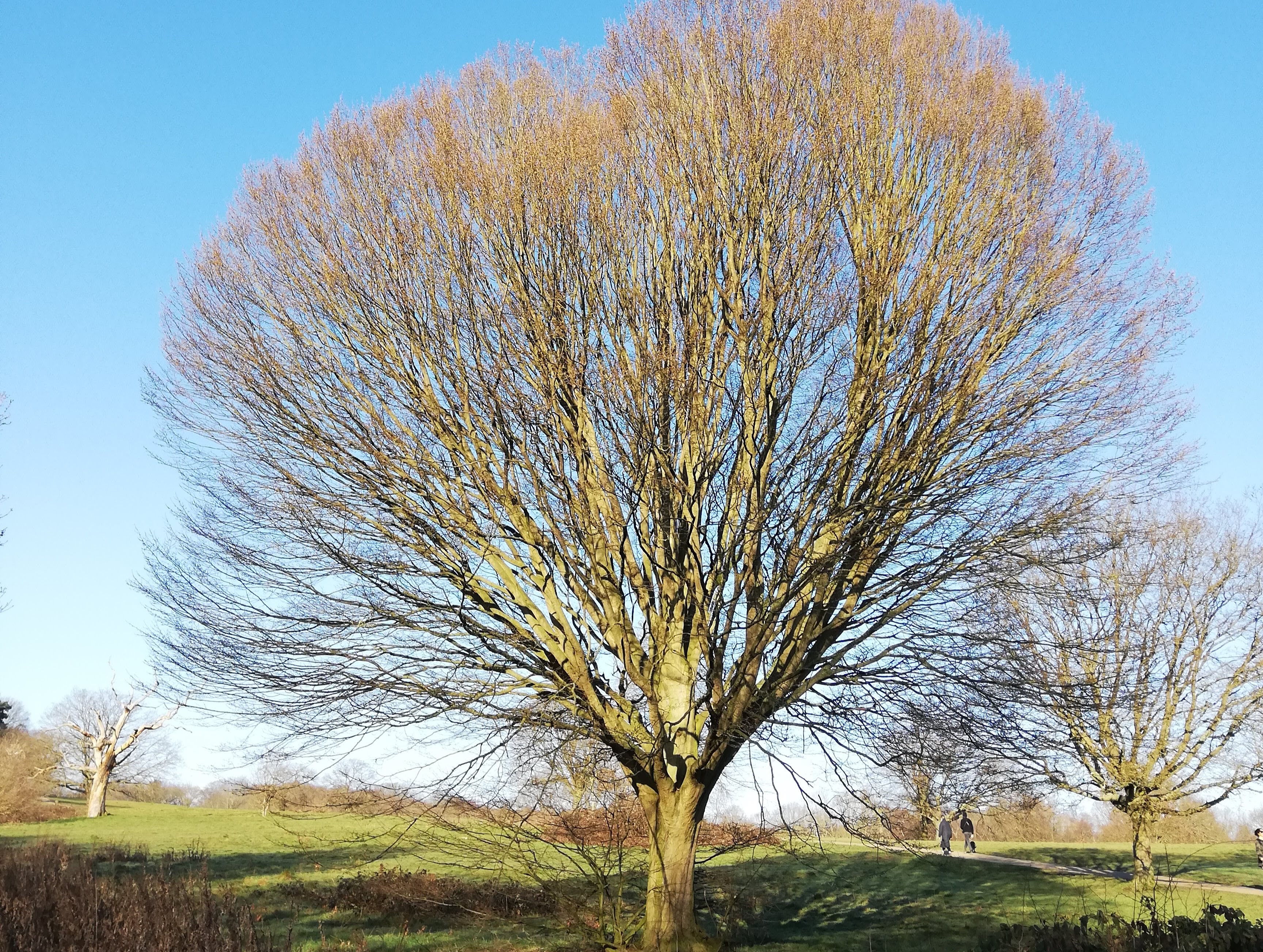
We think of the natural world as following a four-part rhythm, but spring, summer, autumn, winter don’t always quite fit. A freezing cold March doesn’t feel like spring, and November can be “all wrong for autumn”, as the American writer Kurt Vonnegut observed. Instead, he suggested, there are six seasons in the year, including a ‘locking’ season in November and December to lead us into winter, and an ‘unlocking’, in March and April, before spring unfolds.

I came across Vonnegut’s six seasons last week, as part of a writing workshop inspired by Japanese microseasons – an ancient tradition in which the year is divided into 24 periods, and sub-divided into 72 even shorter ones.

Continue reading “Microseasons, mentoring, and a marriage mix-up”

A labour of love: the infodemic managers

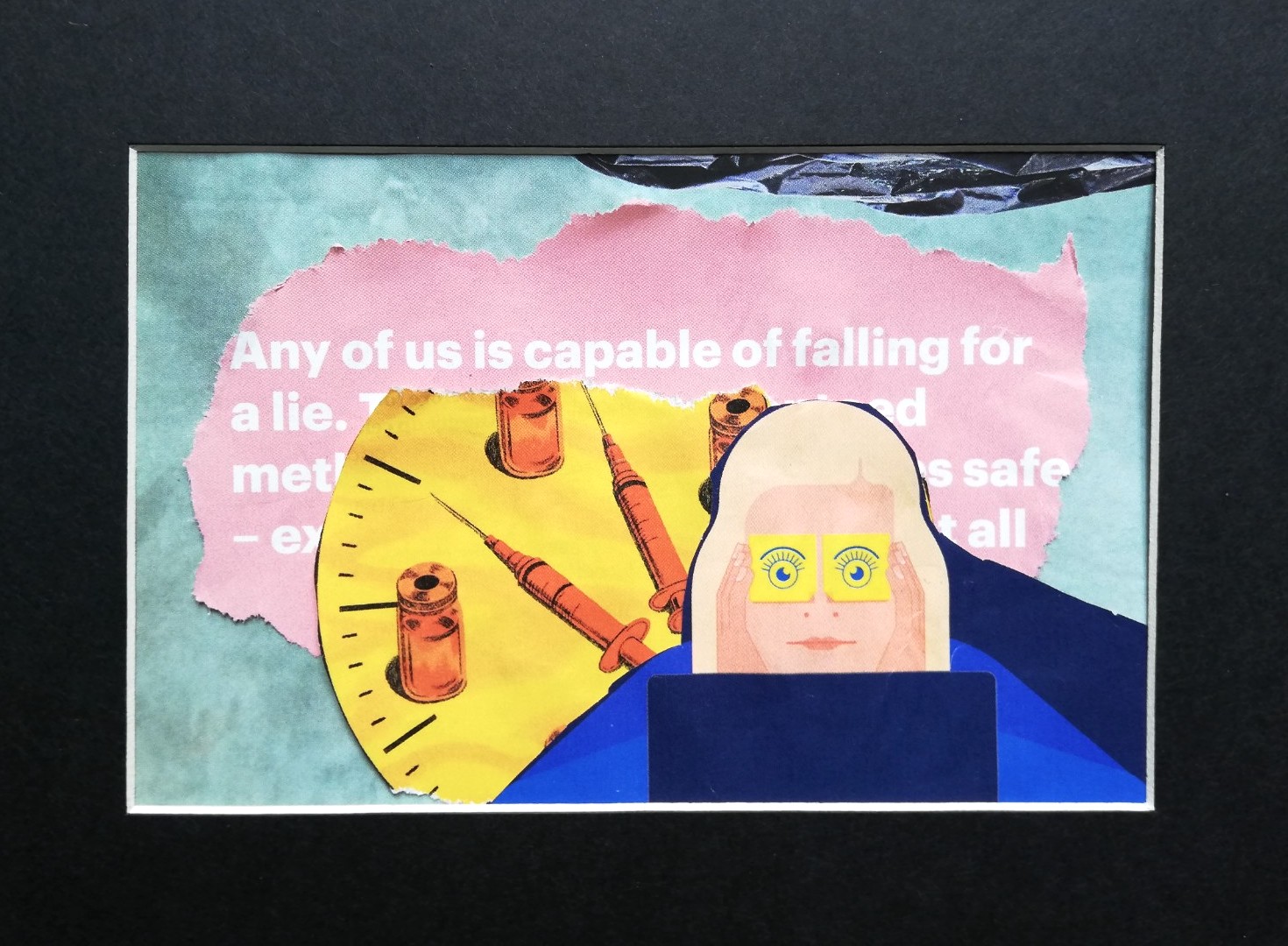
Collage, 3 March

Scrolling through Twitter can be an emotional rollercoaster: the good, the bad, the very ugly. One thing that’s especially hard to shake right now are the posts from exhausted doctors and nurses, begging us to understand that hospitals are overwhelmed with Covid-19 patients, begging us to take distancing rules seriously. Read the replies to such posts, and you’ll see the fake-news army chipping in to claim that the death rate has in fact not risen, that Covid is just like the flu, even that medics are lying about what’s happening before their eyes. 

A small but globally dispersed force has been armed to take on such untruths. Among them is a friend of mine, Debora, who is one of the 135 or so recently trained and certified by the World Health Organization as an ‘infodemic manager’. 

Continue reading “A labour of love: the infodemic managers”

Kwa sababu ya corona

Eid celebrations, Kigoma in western Tanzania, back in 2012

Every week my Kiswahili teacher asks me what I’ve been doing, and each time my answer comes with what’s become a useful phrase: I stayed at home, kwa sababu ya corona. I didn’t go to the office, kwa sababu ya corona. We can’t go to restaurants now, kwa sababu ya corona. My new phrase explains a lot: because of the coronavirus.

His reaction is always similar: a look of surprise and a shake of the head, as he concludes: Maisha ni magumu Uingereza: life is difficult in England. In Tanzania, my teacher says, people aren’t wearing masks and they aren’t avoiding crowds. Life is as normal because there is no corona in the country. 

Continue reading “Kwa sababu ya corona”

In sacred time

To a new year of good adventure
Inspiration in advertising? I’ll take it

The shortest day of the year usually falls around 21 December. This year, as one Twitter user put it recently, “it’s the 296th of March”. 

His comment summed up the bizarre limbo that has been 2020. The rules and restrictions, the depressing and often surreal headlines, and the attempts at making real-life events and celebrations somehow as meaningful from behind a screen have all continued in an apparently never-ending loop of sameness. Recent vaccine success – a brilliant achievement – is a big step forward, but it still doesn’t offer a clear end point, or any transition in most people’s lives, yet. We mask up, we wait on.

Continue reading “In sacred time”

“They don’t know how smart they are. You can tell them.”

Who encouraged them to keep writing? (Photo: Unclaimed exhibition, Barbican 2019)

Much of my work involves moulding and tweaking other people’s writing into shape. But with R and C, I never fix spelling mistakes or question confusing sentence structures. I never wince when they go off topic, never strike through nonsensical ideas.

R and C are writers – nine and ten-year-old ones – who I’ve been working with at the Ministry of Stories, an east London charity. It’s quite a contrast to my day job, which generally doesn’t involve learning about a monster’s detachable limbs or the newly-discovered land of Japina. Nor does my day job often allow the luxury of focusing entirely on one person and one task. 

Continue reading ““They don’t know how smart they are. You can tell them.””

“Success is not guaranteed”: writing as exploration

Unpredictable outcomes

Years of formal education have drummed into us the idea of essay as formula, a rigid structure to follow. That structure may have helped to organise your thinking, but essay-writing also sparks less positive memories: of set titles that fail to inspire, non-negotiable deadlines, struggles to meet a particular word count. 

Go back to the original meaning of the term, though – from the French essayer, ‘to try’ – and the essay becomes a whole lot more interesting. 

I was reminded of this in a recent Vox podcast about the work of Albert Camus, which also explores why he chose the essay form. 

“An essai is a trial, it’s an attempt. And… success is not guaranteed,” says Robert Zaretsky, a philosopher and historian, interviewed on the podcast.

Continue reading ““Success is not guaranteed”: writing as exploration”

Protest the future, redeem the present

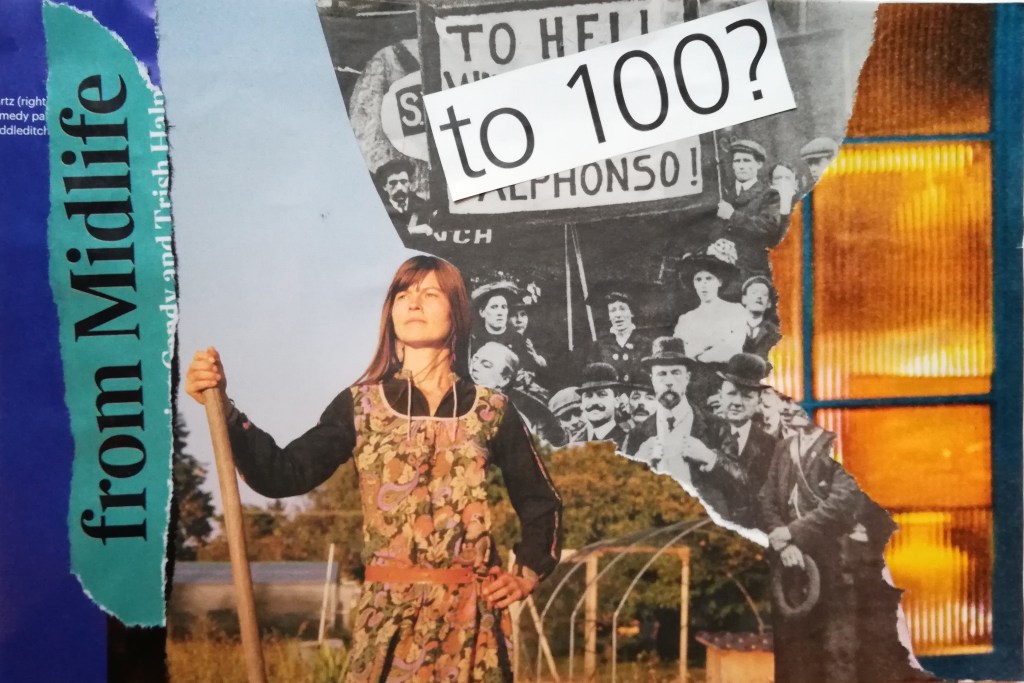
Midlife protest - collage by Anna Patton
Collage, 6 July

In ‘Midlife: A philosophical guide’ MIT professor Kieran Setiya seeks answers to the doubts and fears of his own mid-30s from philosophy. He teases apart the reasons that so many people struggle with this stage of life, and how to start shifting your thinking so that it doesn’t overwhelm you.

When I read it a couple of months ago – presumably buying books about midlife crises is among its symptoms – I found plenty to think about. Including the mindblower about facing up to death: why is imagining a world after your death so much more painful than imagining a world before you were born? Continue reading “Protest the future, redeem the present”